
Baseline Assessment
Professor of Pediatrics
Uniformed Services University
Bethesda, MD
Program Director, Allergy and Immunology Fellowship
Wilford Hall Ambulatory Surgical Center
Lackland Air Force Base, TX
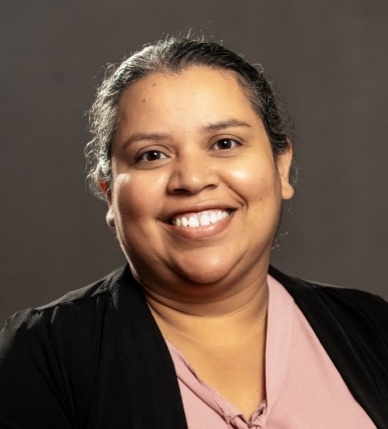 Dr. Karla Adams is a Professor of Pediatrics and a practicing Allergist in San Antonio, Texas. She obtained her medical degree from the Uniformed Services University then completed a Pediatrics residency and Allergy and Immunology Fellowship at the San Antonio Uniformed Services Health Education Consortium in San Antonio, TX. She is currently the Program Director for the Allergy and Immunology Fellowship at Wilford Hall Ambulatory Surgical Center, San Antonio, TX.
Associate Professor of Internal Medicine and Pediatrics
Division of Allergy and Immunology, University of South Florida
Associate Director, Clinical Research Unit
Director, Post-Graduate Education, Division of Allergy and Immunology
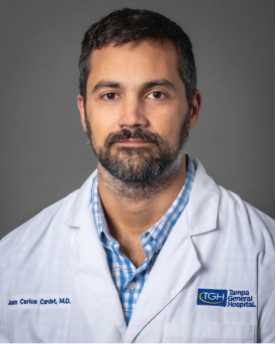 Juan Carlos Cardet, MD, MPH received his BS degree from Harvard University, Cambridge, Massachusetts in 2004; medical degree from the University of Puerto Rico, San Juan, Puerto Rico in 2008; and master’s in public health degree from Harvard University, Boston, Massachusetts in 2017. He completed his internal medicine training at the University of Connecticut in 2011, where he was given the Maxwell O. Phelps, M.D. award for scholarship, and the Hartford Hospital Outpatient Clinic Resident of the Year Award. He completed his Allergy and Immunology training at Brigham and Women’s Hospital/Harvard University in 2014. He served as an instructor in medicine at Harvard Medical School, and as the assistant director of the Asthma Research Center at Brigham and Women’s Hospital from 7/2014—6/2017.
Dr. Cardet specializes in the treatment of patients with asthma and other allergic and immunologic diseases. He is board certified in Allergy and Immunology, and he is a fellow of the American Academy and College of Allergy Asthma and Immunology (AAAAI and ACAAI). He is the chair of the Allergy and Asthma in Older Adults committee and secretary of the Asthma Diagnosis and Treatment interest section of the AAAAI.
His work focuses on mechanisms-based therapeutics for allergic and immunologic diseases. He conducts clinical and translational research and has been awarded NIH K23, R21 and U awards as well as several industry-sponsored and foundation grants for his projects.
Clinical Associate Professor, Medicine
University of Arizona College of Medicine
Associate Clinical Director, Allergy Clinic
Banner University Medical Group
Tucson, AZ
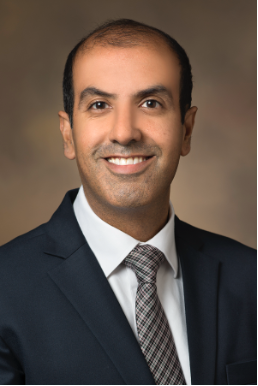 Dr. Puneet Shroff is a board-certified Allergist & Immunologist who joined the University of Arizona in the Division of Pulmonary, Allergy, Critical Care & Sleep Medicine in 2018. He is also a Clinical Associate Professor of Medicine. Dr. Shroff came to Tucson after having built a thriving Allergy & Immunology practice in Houston from 2012 to 2018. He has a keen clinical acumen and a deep understanding of allergy clinic workflow, including allergy testing and immunotherapy. During his time in Houston, Dr. Shroff also served on the Board of the Greater Houston Allergy, Asthma & Immunology Society.
Dr. Shroff received his Doctor of Medicine in Chicago, IL and then completed residency in Internal Medicine at Washington University in St. Louis. He then trained at Baylor College of Medicine in Houston, TX where he completed a dual fellowship in Allergy & Immunology and Rheumatology and served as Chief Fellow. Dr. Shroff has studied internationally, including the University of Oxford, and he is a Certified Instructor in Yoga, including asana and pranayama (breathing) practices. He also has additional training in Integrative Medicine through the Arizona Center for Integrative Medicine founded by Dr. Andrew Weill.


